
Why Is an RGV Automatic Block Production Line Becoming the Preferred Choice for Modern Block Factories?
As block manufacturers continue to scale up production, traditional conveyor-based systems are gradually reaching their limits. Space constraints, inflexible layouts, and increasing labor costs are pushing factories to look for smarter material handling solutions. This is where the RGV (Rail Guided Vehicle) automatic block production line comes into the picture.
By combining intelligent transportation with automated block production, RGV systems are redefining how blocks move through the factory—from molding to curing and stacking.
What Is an RGV Automatic Block Production Line?
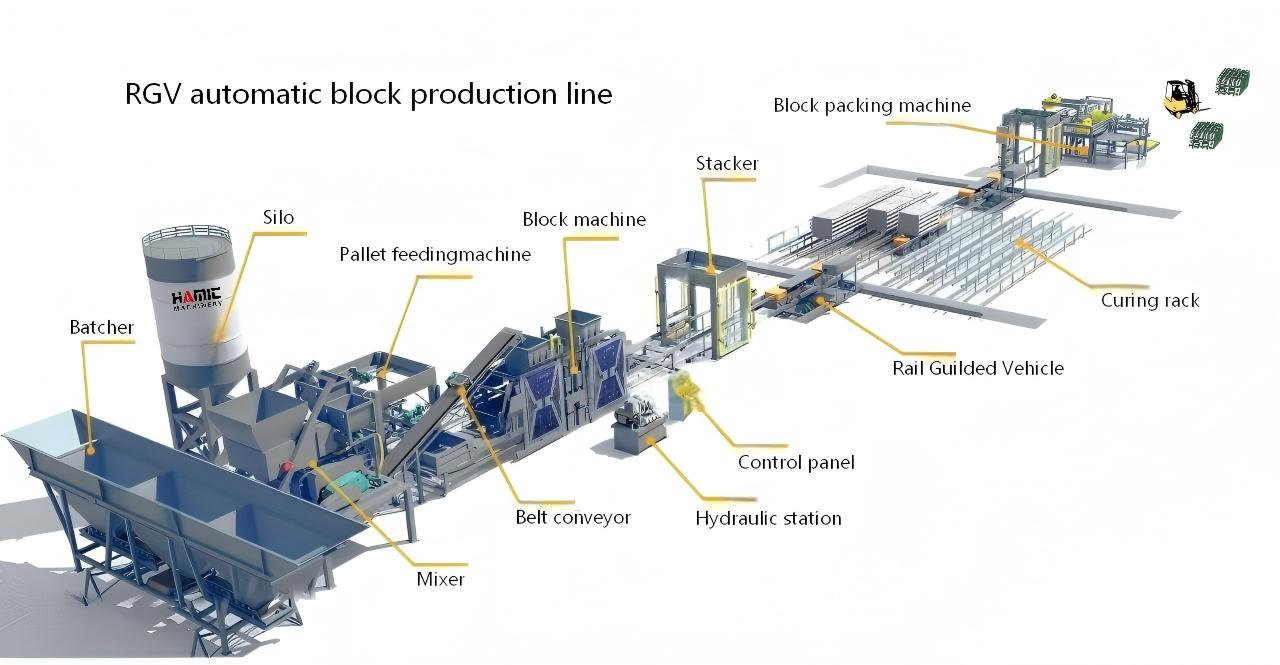
An RGV automatic block production line uses rail guided vehicles to transport fresh blocks, pallets, and molds between different production stations. Instead of fixed conveyors, RGVs move freely along predefined rails, allowing more flexible factory layouts.
In a typical block factory, the RGV system connects:
-
Block forming machine
-
Curing area
-
Pallet circulation system
-
Stacking or packaging stations
This approach creates a smoother and more intelligent production flow.
Why Traditional Conveyors Are No Longer Enough
Conveyor systems have been used in block factories for decades, but they come with clear limitations:
-
Fixed routes that are difficult to modify
-
Large space requirements
-
Higher maintenance due to continuous mechanical movement
-
Limited flexibility when expanding production
As production volumes grow, these drawbacks become more obvious. An RGV-based automatic block production line offers a more adaptable alternative.
Key Advantages of RGV Technology in Block Production
1. Flexible Factory Layout
One of the biggest advantages of RGV systems is layout flexibility. Rail paths can be designed according to the factory’s actual space, making it easier to expand or adjust production in the future.
This is especially useful for manufacturers planning long-term growth. You don’t have to rebuild everything when output increases, which honestly saves a lot of trouble.
2. Smooth and Stable Material Transportation
RGVs operate with controlled speed and precise positioning, reducing vibration and sudden stops. This helps protect fresh blocks during transport, minimizing deformation or surface damage before curing.
Stable transportation equals stable block quality, which is something customers care about more than ever.
3. Higher Automation, Lower Labor Dependence
An RGV automatic block production line significantly reduces manual handling. Once programmed, vehicles automatically transport blocks between stations without operator intervention.
This reduces:
-
Labor intensity
-
Human error
-
Dependence on skilled workers
For many factories, this shift alone justifies the investment.
4. Improved Production Efficiency
By synchronizing RGV movement with block machine cycles, production bottlenecks are reduced. Blocks move exactly when needed, keeping the entire line running at an optimized rhythm.
Some factory managers describe it as “everything just flows better,” and that’s a fair description.
5. Easy Integration with Intelligent Control Systems
RGV systems are usually integrated into a centralized PLC or intelligent control platform. Operators can monitor vehicle status, production flow, and system alarms in real time.
If something goes wrong, it’s easier to locate the issue quickly—this reduce downtime significantly.
Typical Applications of RGV Automatic Block Production Lines
RGV systems are particularly suitable for:
-
Large-scale concrete block factories
-
High-output automatic block production lines
-
Plants producing multiple block types
-
Customers aiming for long-term automation upgrades
They are widely used in regions where efficiency, space utilization, and labor optimization are key concerns.
How Hamic Integrates RGV Systems into Block Production
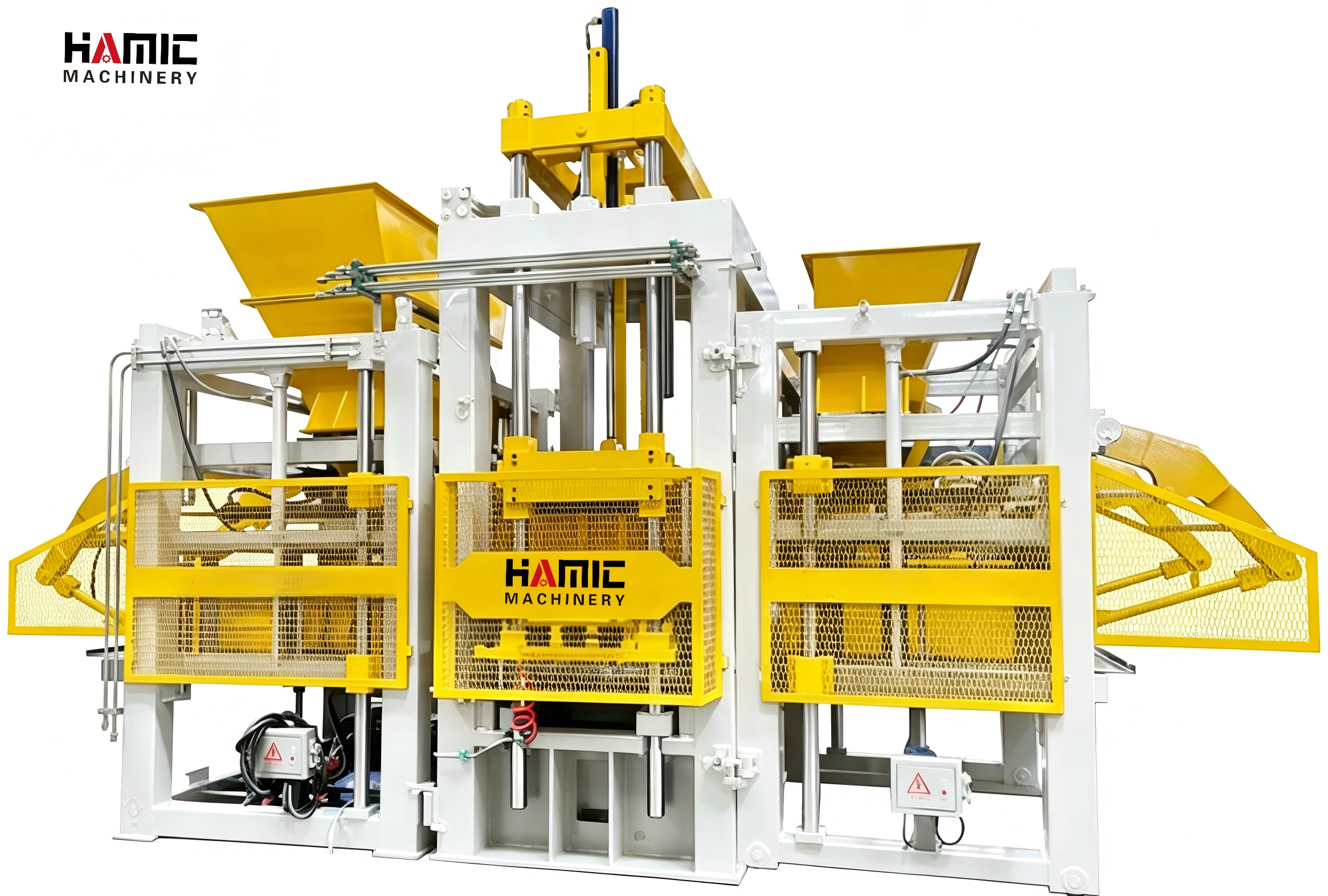
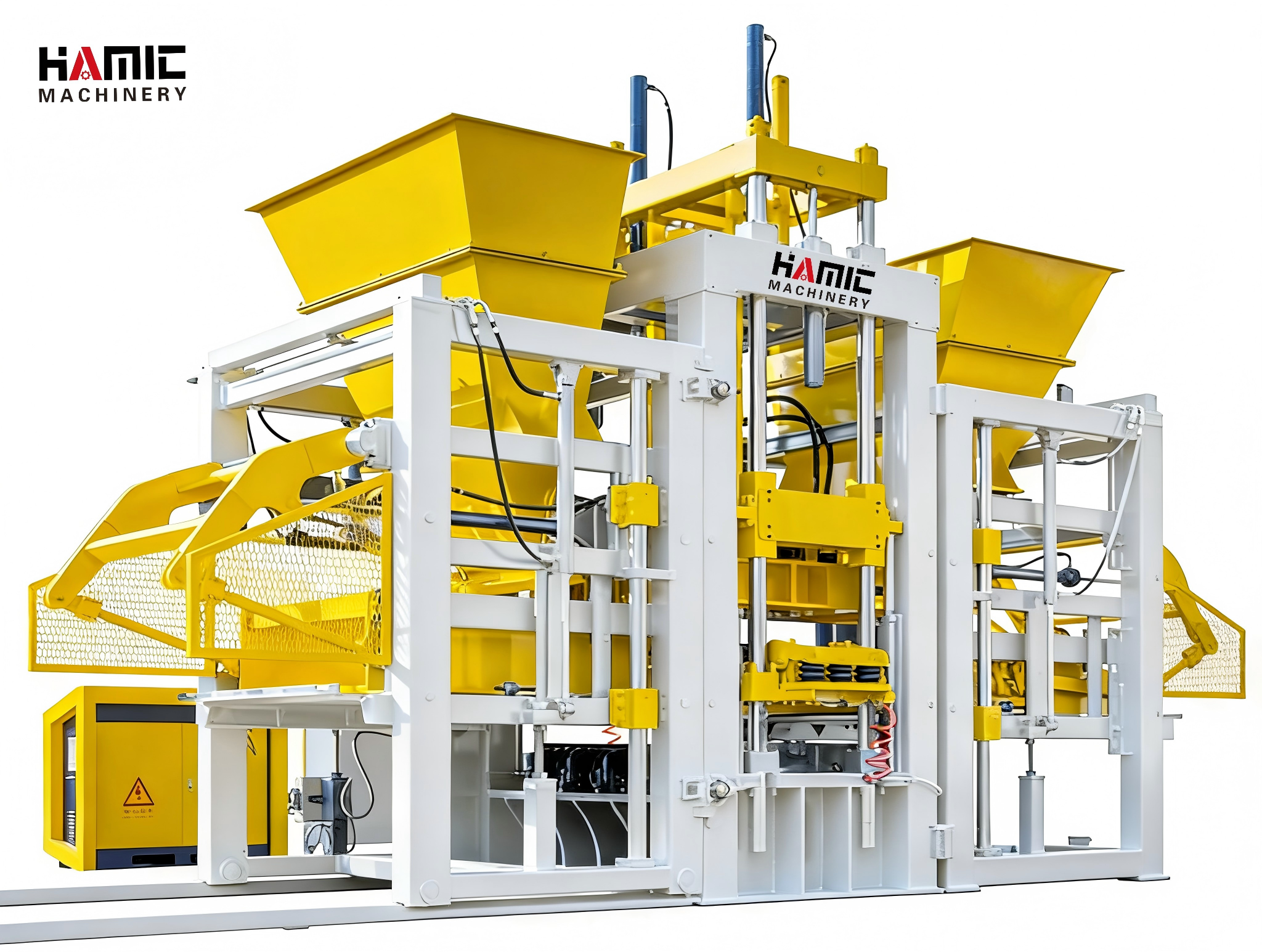
At Hamic, RGV technology is applied as part of a complete automatic block production solution, not as a standalone component. From block forming to pallet circulation, every step is designed to work together.
Hamic focuses on:
-
Customized rail layout design
-
Reliable vehicle control systems
-
Smooth integration with block machines and curing systems
-
Long-term operational stability
The goal is simple: help customers produce more blocks with fewer interruptions.
Is an RGV Production Line Right for Your Factory?
An RGV automatic block production line is ideal if:
-
You plan to expand capacity in the future
-
Your factory layout needs flexibility
-
Labor cost is becoming a concern
-
You want a more intelligent and modern production system
It may not be the cheapest option upfront, but from a long-term perspective, it often delivers better returns.
Conclusion
The RGV (Rail Guided Vehicle) automatic block production line represents a major step forward in block manufacturing automation. With flexible layouts, stable transportation, and reduced labor dependence, it offers a smarter way to manage high-volume block production.
As construction demand continues to rise, RGV-based systems are quickly becoming a standard choice for competitive block factories worldwide.